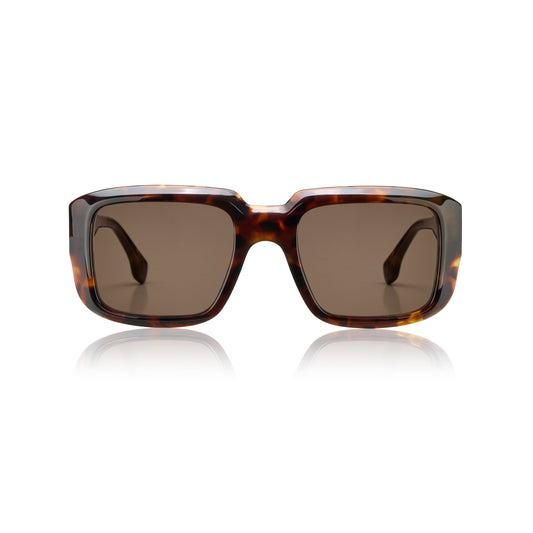
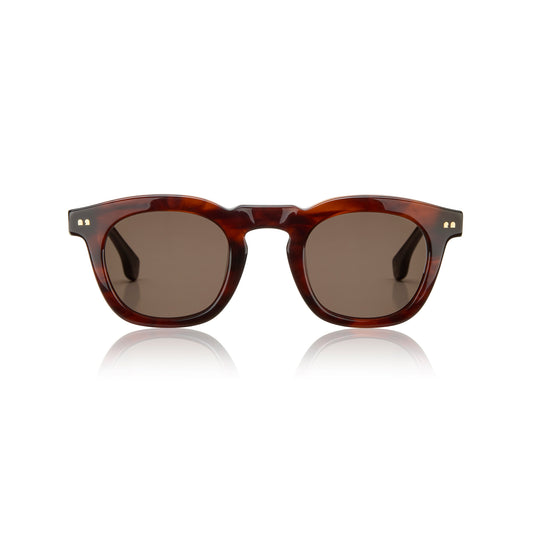
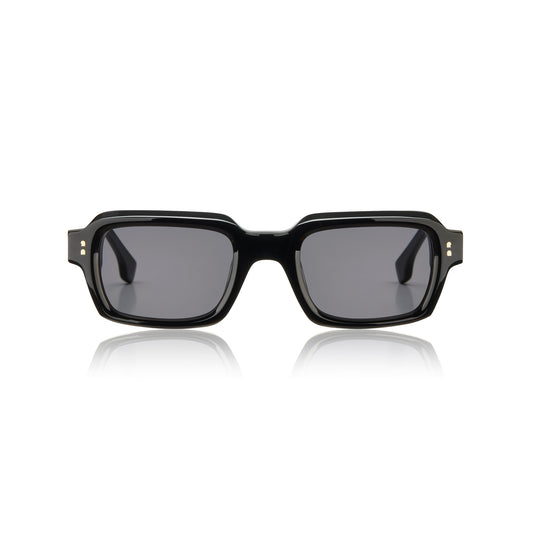
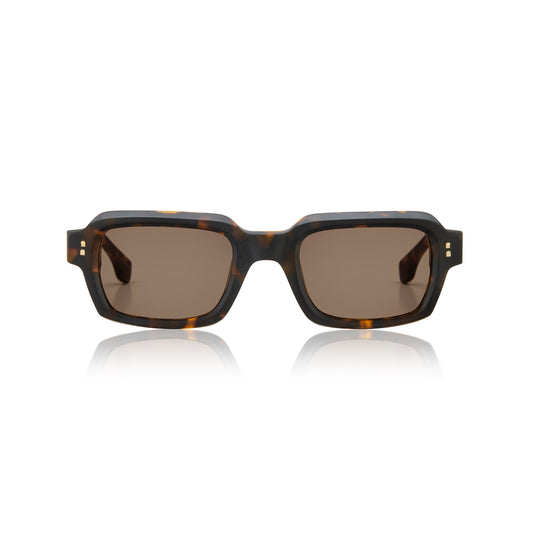
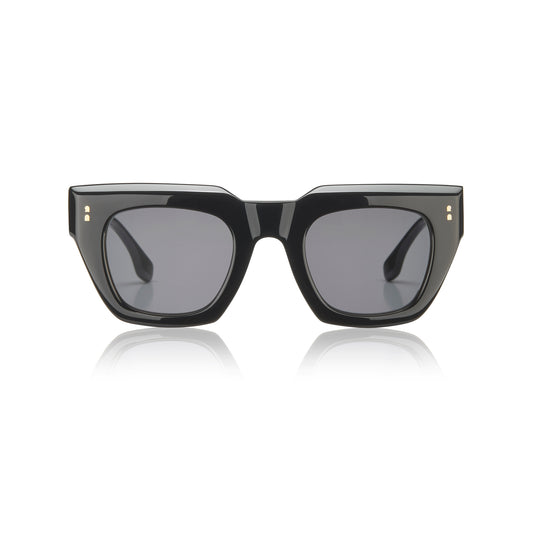
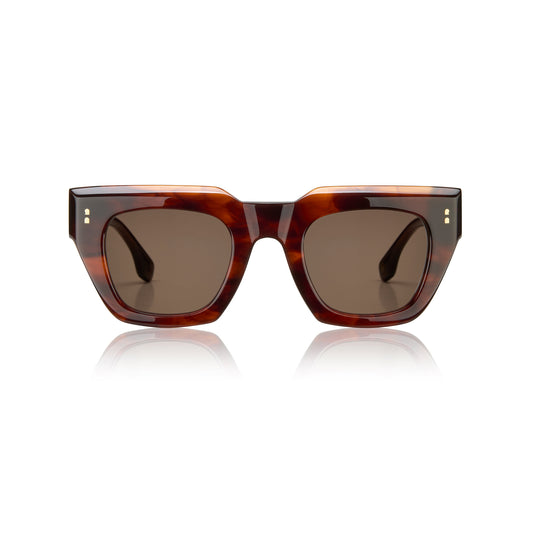
Sunglasses at night: the Studio 54 lesson
Compartir
There is a moment, on any terrace in Barcelona past eleven o'clock, when someone appears wearing sunglasses and everyone does exactly the same thing: look up at the sky to check if they have missed some astronomical phenomenon. There is no sun. It hasn't been sunny for two hours. The only source of light is a string of bulbs that the bar owner hung in 2014 and that flickers with the anguish of someone who has been thinking about changing it for years. And yet there is that person, with the dark lens on, holding a vermouth and a conversation with a serenity that is slightly irritating. The collective reaction always oscillates between two poles: "what a poser" and, deep down, "why didn't I think of that."
It is worth saying early on: wearing sunglasses at night is objectively absurd. So is offering a toast, wearing perfume, tying a scarf around your neck, or calling someone to tell them things you could have written to them. Almost everything we do beyond survival is absurd, and that is precisely the good part. The interesting question is not whether it makes optical sense. It is why humanity has spent half a century repeating the same gesture without agreeing on what it means.
A building in New York where no one wanted their face to be read
To understand it, we must go back to April 1977, to number 254 West 54th Street in New York. An old theater converted into a nightclub by Steve Rubell and Ian Schrager, with a decor that included a man in the moon hanging from the ceiling, a line at the door that acted as an entrance exam, and an admission policy that Rubell described without any shame as composing a salad: you had to mix ingredients. A broke kid from Brooklyn, a countess, a waiter, Liza Minnelli, someone in a feather costume, and someone dressed as an office worker. Bianca Jagger rode into her birthday party on horseback, which says quite a bit about the establishment's level of restraint.
And inside, under a disco ball and at three in the morning, half the room was wearing sunglasses. Andy Warhol—who had turned the dark lens into part of his face long before—Grace Jones, Divine, Halston, people whose names haven't reached us but whose photos have. In the darkest place in the city, the most photographed people on the planet put a filter in front of their eyes. And it wasn't to see less. It was so the room could look at them all it wanted without finding anything out.
The lens as a door, not a curtain
Here is the twist that makes this story survive the fashion that produced it. We usually think of night sunglasses as a curtain: something you put in front to hide. But at Studio 54 they worked in reverse. They were a door. The dark lens was what allowed someone shy to walk into a room full of unbearably self-confident people and behave for a few hours as if they were too. They didn't hide the person: they lent them a version of themselves they didn't dare bring out on the street.
It is exactly what masks have done since masks have existed, and masks have existed since before writing. Carnival, street bands, Venetian masks, the costume you wore at seven years old that made you inexplicably brave. All cultures have discovered, on their own and without consulting each other, that human beings need to cover a part of their face to be able to show the rest. Studio 54 didn't invent anything: it simply found the best-designed industrial accessory in the history of masks and put it under a disco ball.
Why we in the south hide worse
There is also a geographical difference that I find amusing. In Northern Europe, social life happens indoors and with rules, and night sunglasses are read as an excess, almost a lack of manners. In the Mediterranean, something different happens: here, social life happens on the street, in full view of everyone, in front of neighbors, waiters, and a lady on a balcony who has been on that balcony for forty years. We live watched by consensus. And in a culture where everyone sees everything, a small gesture of opacity is not arrogance: it is mental hygiene.
That is why the south, which in theory doesn't need to hide because it hides nothing, is where the gesture is best understood. We don't do it to disappear. We do it to be able to be in the square without the square having full access. It is the same negotiation as always: I give you the conversation, the laughter, the round, and the anecdote; I keep my eyes for myself.
No one has repealed the rule because it never existed
Studio 54 didn't last long—it closed in 1980, and the story of why is another story—but the gesture stayed. And it is still here, on the terrace at eleven o'clock, at the festival, at the airport at seven in the morning, in the person leaving the cinema with the lens on like someone who doesn't want to land just yet. Every era decides it's tacky and every era does it again, because beneath the pose there is something that is not a pose at all: the suspicion, very old and very reasonable, that one is not obligated to be entirely available, all the time, to everyone.
So the next time you see someone with sunglasses at night, before making an automatic judgment, consider the possibility that they are not posing. They might just be opening a very small door to be able to enter the party.
RAVAL designs glasses in Barcelona, in a neighborhood where life has always happened on the street and where we have spent a century understanding that a little opacity is a form of courtesy.