Before It Was Glamour, Hollywood's Sunglasses Were a Bandage
Share
There's an image everyone carries around without quite knowing where they picked it up: the silent-film star stepping out of a car in round, dark sunglasses and a fur coat, radiating an attitude best described as "don't look at me," delivered by someone doing everything possible to be looked at. We've all seen it so many times, in old photographs, in parodies, that we now file it under pure style, the original ancestor of the "no comment" celebrity stance that generations of the famous would later inherit. And, as with almost every gesture that looks like pure style, it turns out to have started life as something far more boring and far more physical: a medical problem.
A film set that burned your eyes
Shooting a film in 1915 required an absurd amount of light, and the ordinary electric bulbs of the day simply weren't up to the job — early nitrate stock needed far more brightness than a household lamp could throw. The industry's answer was the carbon arc lamp, nicknamed the "klieg light" after its manufacturers, the Kliegl brothers. These lamps produced a blinding white light that was — and this is the part nobody mentions in the retrospective documentary — extremely rich in ultraviolet radiation, the same kind that burns your skin at the beach without you noticing until that evening. Now picture that six inches from an actor's face, eight, ten, twelve hours a day, for weeks, with no protective eyewear because nobody had yet worked out that any was needed.
A diagnosis with a brand name attached
The result had its own name — "Klieg eye" — and it was exactly what it sounds like: photoelectric keratoconjunctivitis, a sunburn on the cornea. Red, swollen, streaming eyes, a sensation survivors described as hot sand under the eyelids, and in the worst cases, several days of temporary blindness. This wasn't studio legend or screenwriter's exaggeration: it was a genuine, widespread occupational hazard on Hollywood sets throughout the 1910s and 1920s, common enough that trade magazines ran home remedies — cold tea compresses, sliced raw potato, days spent in total darkness — as matter-of-factly as we'd now discuss carpal tunnel in an office worker. Making a picture, in those years, meant genuinely risking your eyesight for the paycheck.
And then, somebody reached for a pair of glasses
What happened next follows a logic so simple it's almost embarrassing nobody thought of it sooner: if your eyes are red, swollen and streaming between takes, and a fan-magazine photographer might be waiting outside the studio gate for exactly that moment, you put something in front of them. Silent-film stars started wearing sunglasses off camera — during breaks, leaving the lot, on the short walk between set and dressing room — a purely functional, almost medical habit meant to hide eyes that looked like they hadn't slept in three days, even at eleven in the morning. Without anyone planning it, that was the birth of one of the twentieth century's most recognisable images: the star hiding behind a dark lens. What we now read as mystery and glamour began, quite literally, as a dressing.
The accident that turned into costume
Here's the part worth sitting with. The body became attitude astonishingly fast. Nobody put sunglasses on to seem untouchable at first — they put them on because their eyes hurt and they'd rather not be photographed looking like they'd cried all night. But the public, who knew nothing about arc lamps or corneal burns, simply saw Gloria Swanson or any number of other stars stepping out of a car in dark glasses, radiating the manner of someone with important secrets to keep. And once an audience decides something signals power, it starts signalling power in earnest, whether or not that has anything to do with why it started. By the 1930s and 40s, studio lighting had improved and Klieg eye was far less common — the stars barely needed the protection any more. They kept wearing the glasses anyway. The gesture had outlived the ailment, turning from symptom into symbol, which is roughly the biography of most objects we end up calling iconic.
What's left once the cause disappears
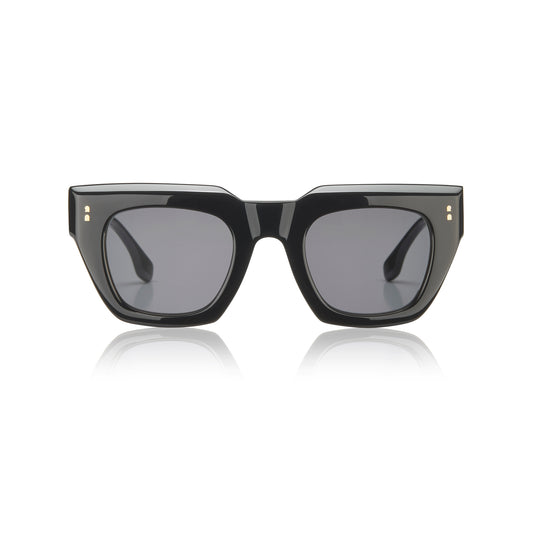
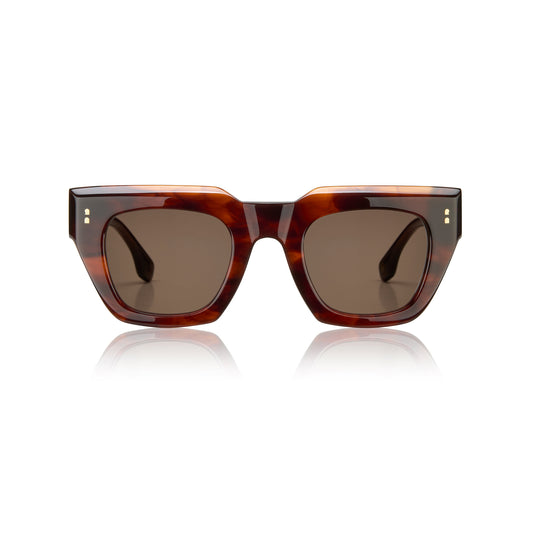
There's something almost comforting about discovering that one of cinema history's most studied gestures of cool began as something as unglamorous as a corneal burn from overwork. We like to imagine style gets invented at a drawing board, when more often it's inherited from a need that no longer even exists: someone solves a real problem, the gesture survives the problem, and generations later we're still repeating it without asking why. Sunglasses on set, at the hotel door, coming down an aircraft's steps — that entire vocabulary of "star avoiding the camera" that we now associate with a very particular kind of fame started out as early-century eye care. It's a story we're fond of at RAVAL, this business of objects that begin as pure function and end up as character, because it's more or less what we try to do with every frame that leaves the workshop: look after the eyes first, and let the style arrive on its own, the way it always has.
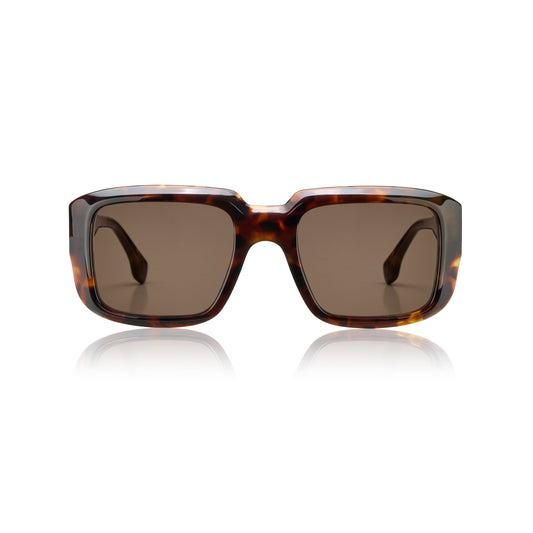
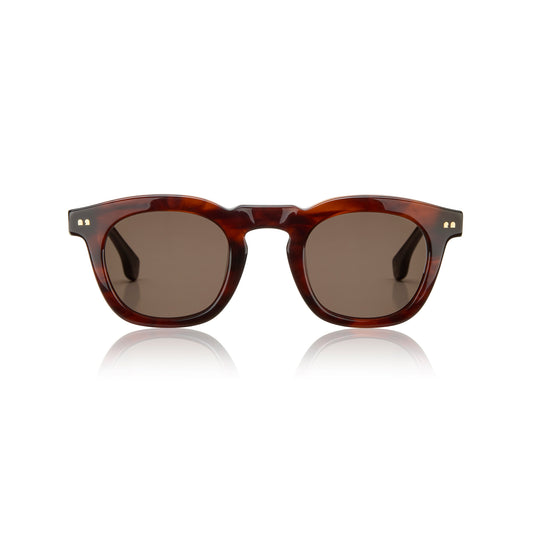
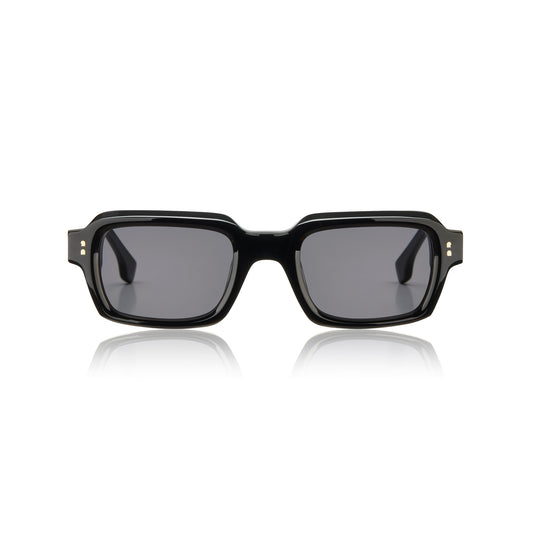
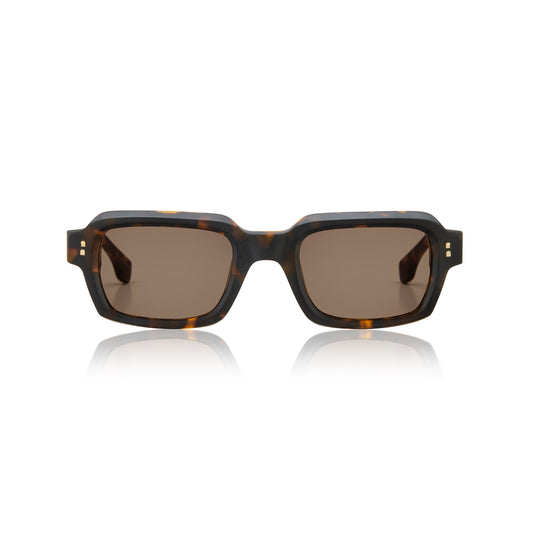
RAVAL designs eyewear in Barcelona, heir to a century of people hiding — and finding themselves — behind a dark lens.