Why we wear sunglasses: the Chinese judges who invented the poker face
Share
There is a gesture all of us have made and none of us has ever properly explained: putting on sunglasses somewhere with no sun in it. On the tube. In a pub at four in the afternoon. In an airport — a building engineered specifically so that no natural light shall ever enter it, and where there is nevertheless always one person waiting at the baggage carousel behind dark lenses with the intact dignity of somebody who does not intend to explain themselves. We tend to blame the hangover, the jet lag, or the universal alibi of being in a hurry. The truth is older and rather less flattering. We don't put them on to see less. We put them on to be seen less.
Eight centuries before the first terrace
The version of the story that rarely gets told takes place in China, around the twelfth century. Court judges began using flat panes of smoky quartz — a naturally dark stone, with no prescription and no optical ambition whatsoever — held in front of the eyes during questioning. Not for the light, which in a medieval courtroom was a problem of scarcity rather than excess. They wore them because a judge who reacts is a judge who has already spoken. An eyebrow that lifts, a pupil that widens by half a millimetre, a blink in the wrong place: the accused reads all of it long before the verdict is read out. Smoky quartz didn't help anyone judge better. It helped them judge without anyone knowing which way the judging was going.
It is a detail that rearranges things. The first documented function of a dark lens was not to protect the eye from the world, but to protect the world from the information leaking out of the eye. Which makes sunglasses, technically, the first portable privacy technology in history — comfortably older than the password, the sealed envelope, and the small plastic shutter we now slide over the laptop camera. Before the word "privacy" existed, somebody was already holding a stone in front of their face so that nobody could read their mind.
The eye is an informant with a terrible record
And they were right, which is the uncomfortable part. The gaze is the most indiscreet organ we own. We can train the voice, control the posture, choose the clothes, rehearse the sentence, hold a polite smile through an entire dinner party with technically flawless execution — and the eyes will still go freelance, disclosing boredom, desire, panic, exhaustion, or that specific and hard-to-name emotion produced when somebody tells you the same anecdote for the second time. Every language on earth has expressions about what the eyes say. None of them has expressions about what the ears say. There will be a reason for that.
Which is why the dark lens has always carried a moral double edge. In poker it is outright regulated. In a police station it makes people nervous. At a funeral it is forgiven. In a job interview it would be a form of suicide. It is the only accessory that can simultaneously mean "I am on holiday" and "do not ask me anything", and the only garment capable of making a stranger more interesting by the simple mechanism of giving you less information about them. Mystery, as anyone who has ever attempted to flirt already knows, is almost never a quality. It is usually an absence, well managed.
A tiny, socially approved mask
What keeps the Chinese judges relevant eight hundred years later is that nothing essential has changed. We still live in cities where we are permanently visible to people we do not know, we still need small doses of anonymity in order to cross a square without becoming a public figure, and we still have not invented anything better than a dark lens for the purpose. It is the one mask society accepts without asking questions: you may walk into any building on earth with half your face covered, provided it is this half and this specific object, and nobody will call anybody. We have normalised a disguise and filed it under summer accessories.
So sunglasses have never really been a frivolous object, however many of them are sold from revolving racks at petrol stations. They are a tool for controlling how much of yourself you make available to everyone else. A twelfth-century judge and a woman walking down La Rambla on an ordinary Tuesday are performing, twelve centuries and ten thousand kilometres apart, exactly the same calculation.
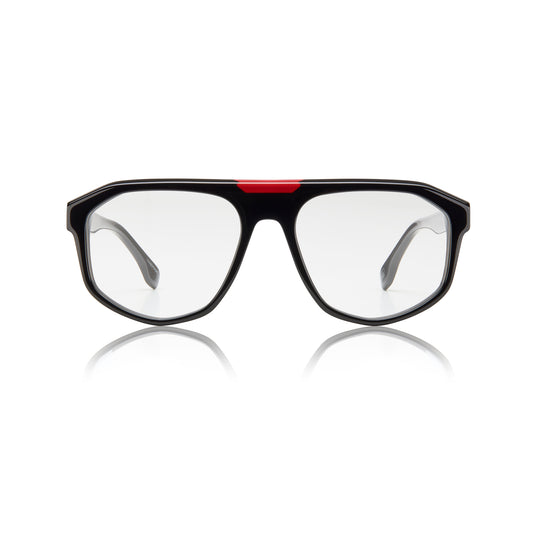
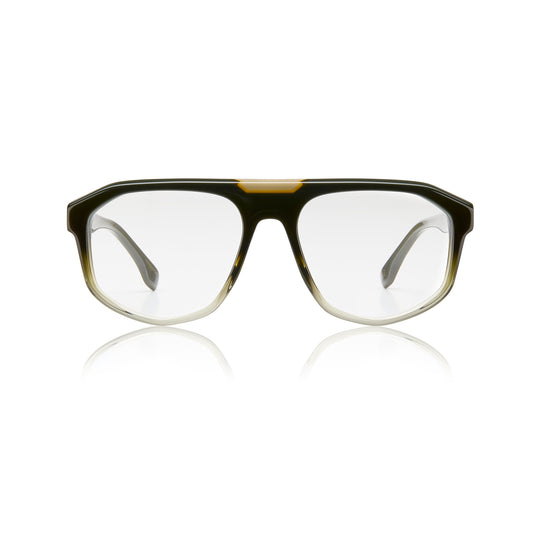
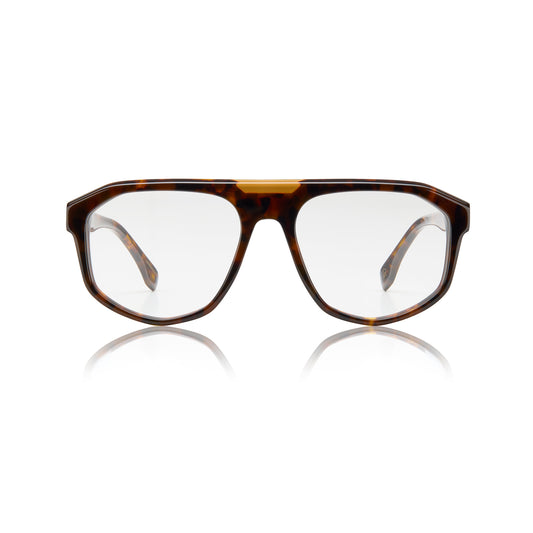
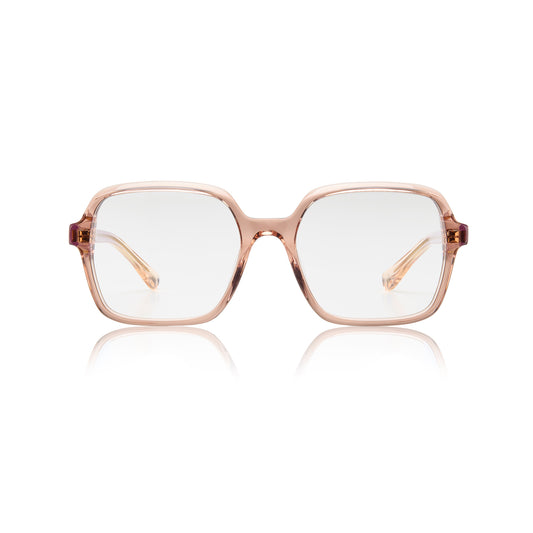
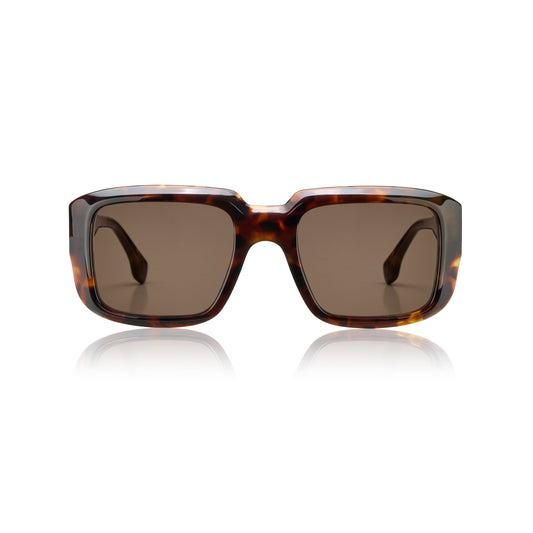
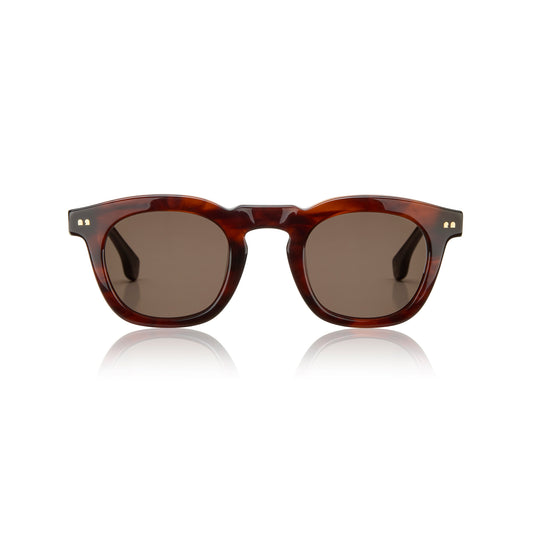
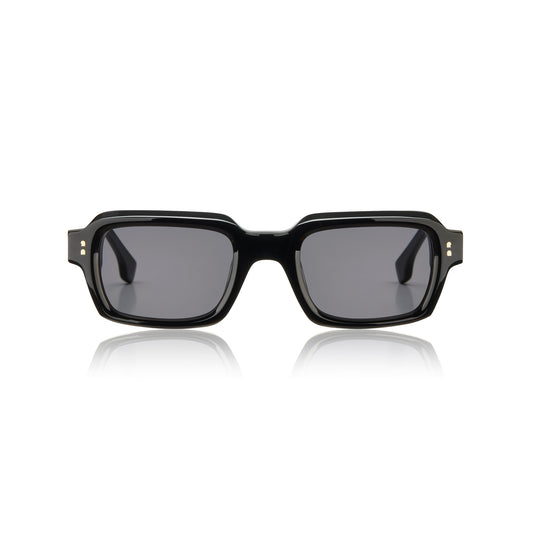
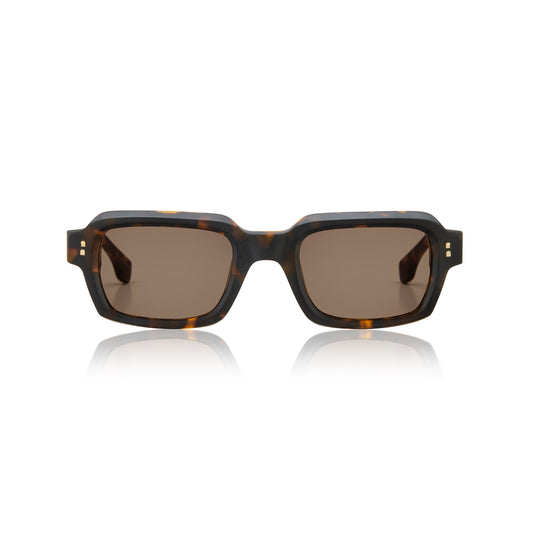
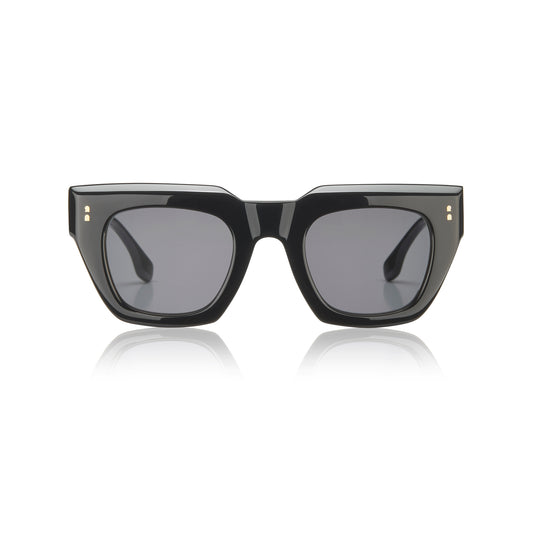
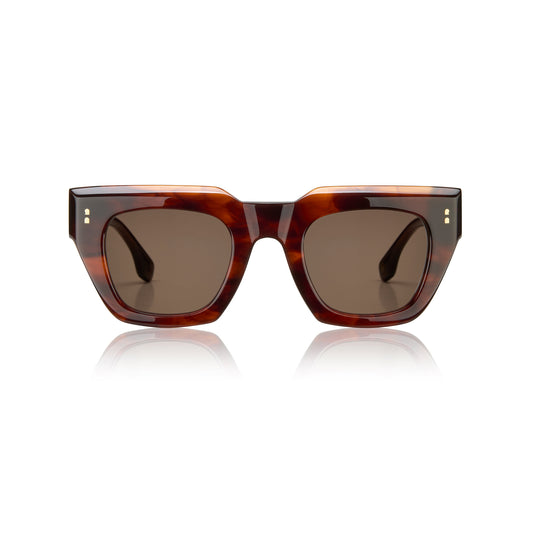
At RAVAL we design in a neighbourhood where life happens entirely in the street, and where everybody, sooner or later, needs somewhere to put their gaze. We like to think a frame isn't only chosen for how it suits you, but for what you decide not to show while you're wearing it.
What were sunglasses first used for? Not sun protection. The earliest documented use of dark lenses, in twelfth-century China, was by judges, who used smoky quartz to conceal their expressions during questioning.
RAVAL designs eyewear in Barcelona, in El Raval. Culture, not catalogue.